
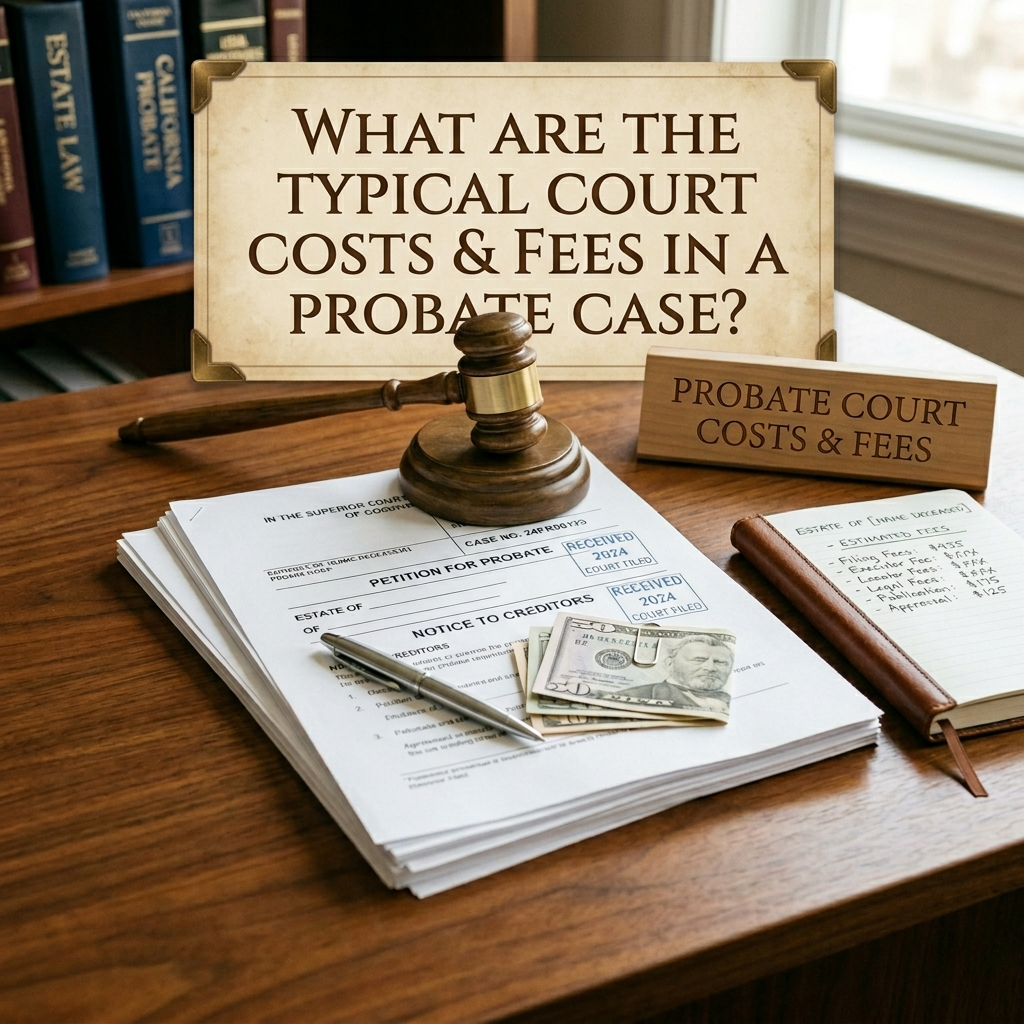
When someone passes away, their estate may need to go through probate, the legal process through which a court oversees the administration of the deceased person’s estate. Probate generally involves validating a will when one exists, appointing an executor or personal representative, identifying and valuing assets, addressing debts and taxes, and distributing remaining property to the rightful beneficiaries.
Although probate serves an important legal purpose, it can involve several expenses that reduce the amount ultimately received by beneficiaries. Typical probate expenses include court filing fees, attorney fees, executor or personal representative compensation, appraisal costs, accounting services, publication fees, bond premiums, and other administrative expenses.
The total cost depends on several factors, including the state where probate takes place, the value and complexity of the estate, whether disputes arise, and how much professional assistance is needed.
Understanding these expenses before they arise can help families make informed decisions, prepare financially, and explore estate planning strategies that may reduce unnecessary probate costs.
1. Court Filing Fees and Other Court Costs
Court filing fees are among the first expenses associated with opening a probate case. These fees are generally paid when the executor or another interested person submits the required documents to the probate court.
Depending on the jurisdiction, the initial filing may include a petition to open probate, submit a will for validation, or request the appointment of a personal representative.
Additional court costs may arise throughout the process, including fees for:
- Filing additional petitions, motions, or required documents.
- Obtaining certified copies of court orders or appointment documents.
- Scheduling certain hearings or requesting other court services.
- Filing inventories, accountings, or other required reports, where applicable.
How much are probate court filing fees?
There is no single nationwide probate filing fee. Each state and local court may establish its own fee schedule. Some courts charge a flat filing fee, while others calculate certain fees based on the estate’s value or the type of filing.
For this reason, families should check the current fee schedule of the probate court handling the estate rather than relying on a general national estimate.
2. Probate Attorney Fees
Attorney fees can represent a significant portion of the total cost of administering an estate, particularly when the probate process involves complicated assets, creditor claims, tax matters, or disagreements among beneficiaries.
A probate attorney can help the personal representative understand legal responsibilities, prepare court documents, comply with filing requirements, address disputes, and navigate the administration process.
Probate attorneys may use different billing arrangements, including:
- Hourly fees: The attorney charges for the time spent working on the estate.
- Flat fees: A predetermined amount covers specific probate services.
- Percentage-based fees: In certain jurisdictions or arrangements, compensation may be calculated using a percentage of the estate’s value, subject to applicable law and court requirements.
The billing method and amount depend on the attorney, jurisdiction, and complexity of the matter.
A straightforward estate with organized records and no disputes may require less legal work than an estate involving multiple properties, business interests, contested documents, or complicated creditor claims.
It is also important to understand that attorney fees are not automatically calculated as a percentage of every estate. Some states regulate probate attorney compensation, while others use different standards for determining reasonable fees.
3. Executor or Personal Representative Compensation
Administering an estate involves substantial responsibility. The executor, also known as a personal representative in many states, is responsible for carrying out the duties required to settle the estate.
These responsibilities may include:
- Locating and securing estate assets.
- Preparing an inventory of property.
- Notifying beneficiaries and creditors when required.
- Paying valid debts, expenses, and applicable taxes.
- Maintaining accurate financial records.
- Distributing assets according to the will or applicable law.
- Completing required court filings and closing the estate.
Because these duties require time and effort, an executor may be entitled to reasonable compensation under applicable state law.
How much does an executor get paid?
Executor compensation varies by jurisdiction. Depending on state law and the circumstances, compensation may be established by statute, determined by reasonable compensation standards, provided for in the will, or approved by the court.
Some jurisdictions calculate compensation using the estate’s value or income received during administration. Others consider the work performed and the time required.
An executor may also be able to receive reimbursement for reasonable expenses personally incurred while administering the estate. Compensation and expense reimbursement are separate matters and should be properly documented.
4. Appraisal and Asset Valuation Costs
Before estate assets can be distributed or sold, their value may need to be established.
Certain assets are not easy to value without professional assistance. These may include:
- Residential or commercial real estate.
- Jewelry, artwork, and valuable collectibles.
- Closely held businesses and ownership interests.
- Specialized equipment or other valuable personal property.
A qualified appraiser may be needed to determine the fair market value of these assets.
Accurate valuations can help the executor prepare estate inventories, make informed decisions about selling or distributing property, address beneficiary questions, and meet applicable tax or reporting requirements.
For example, if an estate includes a family home that will be distributed to one beneficiary while other beneficiaries receive different assets, an appraisal may help establish a reliable value for the property.
Appraisal costs vary according to the asset type, its location, the complexity of the valuation, and the professional hired.
5. Accounting, Tax Preparation, and Financial Administration
Probate requires careful financial management. The executor must keep track of estate income, expenses, payments, asset sales, and distributions.
Depending on the estate’s circumstances, professional accounting or tax assistance may be necessary.
These expenses may include:
- Preparing required federal or state tax returns.
- Preparing estate income tax returns, when applicable.
- Maintaining financial records and transaction reports.
- Reconciling estate bank accounts.
- Preparing formal accountings when required.
- Obtaining assistance with complex tax or financial matters.
For example, an estate that owns rental property may continue receiving rental income while probate is pending. The executor may need to track that income, pay property-related expenses, maintain records, and address applicable tax reporting requirements.
Professional accounting assistance can help reduce reporting errors and make estate transactions easier to document and explain.
6. Publication, Notification, Bond, and Other Administrative Expenses
In addition to major legal and professional fees, probate may involve smaller administrative expenses that can add up over time.
Common examples include:
Publication fees: Some jurisdictions require notices to creditors or other interested parties to be published in an approved newspaper or publication.
Mailing and notification costs: The executor may need to send notices, legal documents, or other required communications to beneficiaries, creditors, and interested parties.
Executor or fiduciary bond premiums: Depending on state law, the will, and the court’s requirements, an executor may need to obtain a bond. A bond provides financial protection for the estate against certain losses resulting from misconduct or failure to perform required duties. The cost generally depends on the bond amount and underwriting requirements.
Property maintenance and preservation: If the estate includes real estate, vehicles, or other physical property, ongoing expenses may include insurance, utilities, repairs, security, storage, and maintenance.
Other administrative expenses: Postage, document preparation, record retrieval, and other necessary services may also contribute to the total cost.
Although individual expenses may appear relatively small, they can become substantial when probate takes several months or involves multiple assets.
What Factors Affect the Total Cost of Probate?
Not every probate case costs the same amount. Two estates with similar values can have very different administration expenses because of differences in their assets, legal requirements, and family circumstances.
The following factors can have a significant effect on probate costs:
| Factor | How it can affect costs |
|---|---|
| Estate value | May affect certain statutory fees, compensation calculations, or administrative requirements. |
| Number and type of assets | More assets or difficult-to-value property can require additional work. |
| Real estate and business interests | May require appraisals, ongoing management, or additional legal assistance. |
| Family disputes | Can lead to hearings, litigation, and additional attorney fees. |
| Outstanding debts and taxes | May require additional accounting, tax preparation, and financial administration. |
| Probate duration | Longer administration can increase professional fees and property-related expenses. |
| State requirements | Court procedures and fee schedules differ by jurisdiction. |
One point is worth emphasizing: a larger estate does not automatically mean a more expensive probate case. A well-organized estate with clear documents and cooperative beneficiaries may be easier to administer than a smaller estate involving disputes, missing records, or complicated property ownership.
Who Pays the Costs of Probate?
In most cases, ordinary and necessary probate administration expenses are paid from estate assets rather than directly by the beneficiaries.
The executor generally uses available estate funds to pay approved expenses, subject to applicable state law and court requirements. These may include court costs, reasonable professional fees, property preservation expenses, and other authorized administrative costs.
If the estate does not have enough available cash, the executor may need to consider other options, such as selling estate property or taking other legally permitted steps to cover expenses.
Beneficiaries should understand that probate expenses can reduce the amount ultimately available for distribution. However, the executor should not assume that every expense can automatically be charged to the estate. Expenses must be appropriate, properly documented, and handled according to applicable law.
Can Probate Costs Be Reduced Through Estate Planning?
Yes. Thoughtful estate planning may help reduce certain probate expenses by arranging for eligible assets to transfer outside the probate process.
The goal is not simply to avoid every possible cost. It is to create an estate plan that makes asset transfers more organized, protects the person’s intentions, and reduces unnecessary administrative complications.
Some estate planning strategies include:
Establishing and Funding a Revocable Living Trust
A revocable living trust can allow assets properly transferred into the trust during the person’s lifetime to pass to successor trustees and beneficiaries without going through probate, subject to applicable law.
However, creating a trust alone is not enough. Assets generally must be properly retitled or otherwise transferred into the trust. Property left outside the trust may still require probate.
Reviewing Beneficiary Designations
Certain assets, including life insurance policies, retirement accounts, and payable-on-death or transfer-on-death accounts, may pass directly to named beneficiaries.
Keeping these designations current can help prevent assets from being distributed contrary to the owner’s intentions.
It is important to remember that beneficiary designations generally operate according to the account or policy terms and applicable law, rather than automatically following instructions in a will.
Considering Joint Ownership Arrangements
Certain forms of joint ownership include rights of survivorship, allowing property to pass to the surviving owner when one owner dies.
However, adding someone as a joint owner can have legal, financial, tax, and creditor implications. It may also create unintended ownership rights during the owner’s lifetime.
Joint ownership should therefore be considered carefully rather than used as a universal probate-avoidance strategy.
Keeping Estate Planning Documents Updated
An estate plan should reflect current family circumstances, financial assets, and personal wishes.
Reviewing wills, trusts, beneficiary designations, and asset ownership arrangements after major life events can help reduce confusion and potential disputes during estate administration.
No strategy eliminates every probate expense or guarantees that an estate will avoid probate entirely. The most appropriate approach depends on the person’s assets, goals, family situation, and state law.
Frequently Asked Questions About Probate Costs and Fees
How much does a typical probate case cost?
There is no standard nationwide probate cost. Expenses depend on the state, court filing requirements, estate value, asset complexity, attorney involvement, executor compensation, and whether disputes arise. A straightforward estate may cost considerably less to administer than a contested or complicated estate.
What is the most expensive part of probate?
Attorney fees are often one of the largest probate expenses, particularly when an estate involves disputes, complicated assets, or extensive legal work. However, executor compensation, appraisal costs, taxes, and other administrative expenses can also contribute significantly to the total.
Do all probate cases require an attorney?
Not every jurisdiction requires an executor to hire an attorney for every probate matter. However, some estates are legally or procedurally complex, and professional guidance may help prevent costly mistakes. Whether legal representation is required or advisable depends on the jurisdiction and circumstances.
Are probate fees based on the value of the estate?
Some probate-related fees and executor compensation arrangements may be calculated using the estate’s value, while others are flat fees or based on services performed. The rules vary by state and by the type of expense.
Can beneficiaries be required to pay probate expenses?
Ordinary estate administration expenses are generally paid from estate assets. Beneficiaries may receive less because these expenses reduce the amount available for distribution. Whether beneficiaries have any direct financial responsibility depends on the circumstances and applicable law.
Does a living trust eliminate probate costs?
A properly funded revocable living trust may help certain assets avoid probate. However, it does not necessarily eliminate all probate expenses because assets left outside the trust may still require court administration. Trust administration can also involve its own legal, accounting, and administrative costs.
Conclusion
Probate is an important legal process, but the expenses involved can affect how much of an estate ultimately reaches its beneficiaries. Court filing fees, attorney fees, executor compensation, appraisals, accounting services, and other administrative costs can add up, especially when an estate is complicated or disputes arise.
Although some expenses are unavoidable, careful estate planning can help reduce unnecessary costs and make the transfer of assets more organized.
Establishing an appropriate estate plan, keeping beneficiary designations current, organizing financial records, and considering whether a revocable living trust or other transfer arrangement is suitable can make a meaningful difference.
Remember, this information serves as educational and informational content only and is not a substitute for legal advice. Before making any changes to your estate plan, consult with a lawyer you trust to ensure your decisions align with your individual needs and circumstances. Click the link below to set up a meeting with O’Brien Estate Law, LLC, where we can discuss your specific situation and guide you towards a comprehensive estate plan.