
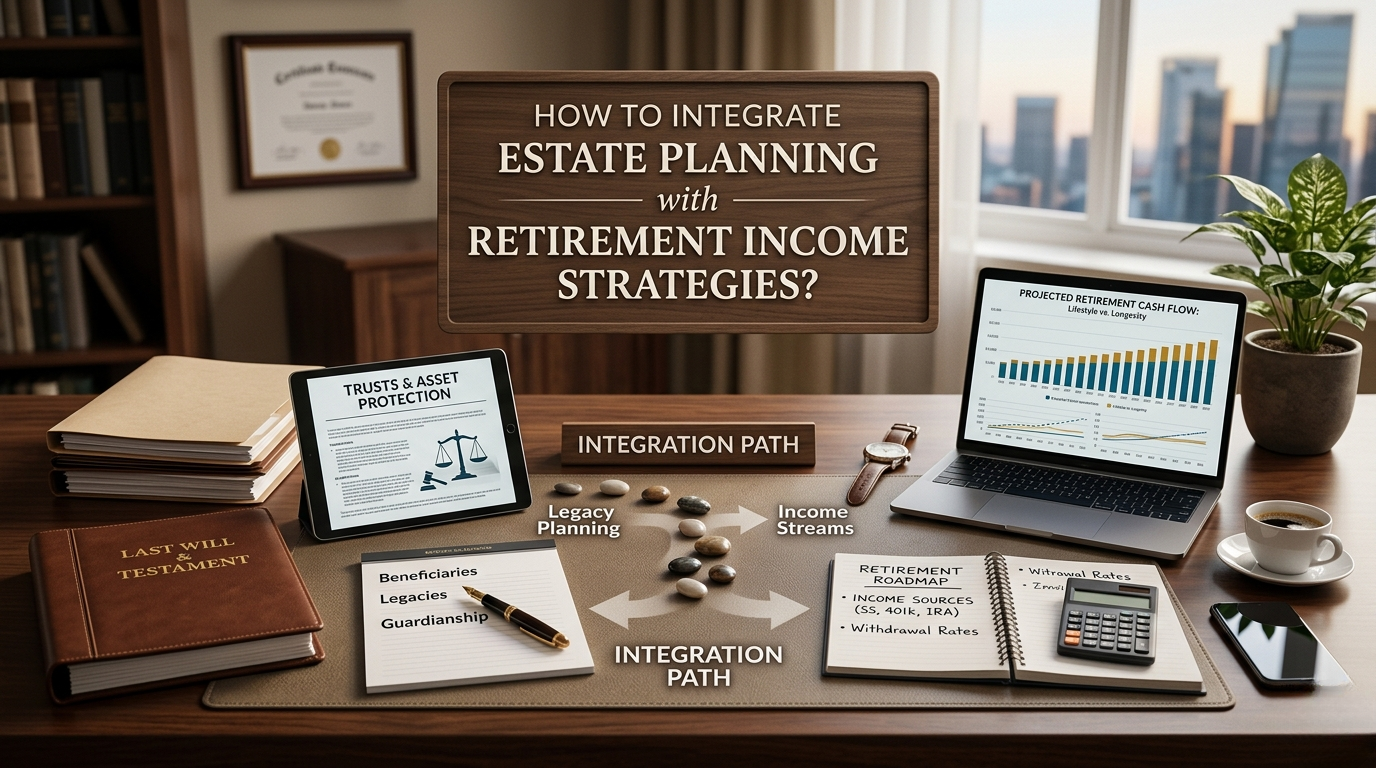
Retirement planning is about more than accumulating enough money to stop working. It is about ensuring your assets can support your lifestyle throughout retirement while protecting your financial security and preserving what you hope to leave behind for your loved ones.
How do you integrate estate planning with retirement income strategies?
Start by coordinating your retirement account withdrawals, beneficiary designations, tax planning, trusts, and healthcare arrangements with your broader estate plan. Reviewing these elements together can help you manage your income during retirement, prepare for unexpected expenses, and ensure your assets are distributed according to your wishes.
Retirement income planning focuses on how you will pay for your living expenses after you stop working. Estate planning determines how your assets will be managed if you become incapacitated and how they will be transferred after your death.
When these plans work together, you can make more informed financial decisions, reduce the risk of unintended consequences, and create a more consistent strategy for protecting your family’s future.
1. Coordinate Your Retirement Accounts With Your Estate Plan
Retirement accounts are often among the most significant assets a person owns. Traditional IRAs, Roth IRAs, 401(k) plans, and other employer-sponsored retirement accounts can provide income throughout retirement while also representing a substantial part of an eventual inheritance.
However, these accounts may follow distribution rules that differ from those governing assets distributed under a will or trust.
For example, retirement accounts commonly pass according to beneficiary designations rather than the instructions in your will. If your beneficiary information is outdated, your assets could go to someone you no longer intend to benefit.
Review your retirement accounts alongside your estate planning documents to ensure they reflect your current wishes.
Consider the following steps:
- Review the primary and contingent beneficiaries listed on each retirement account.
- Confirm that beneficiary designations remain appropriate after marriage, divorce, births, or other significant family changes.
- Understand how inherited retirement accounts may be distributed under applicable tax rules.
- Coordinate retirement account beneficiaries with your will, trust, and broader inheritance goals.
- Review employer-sponsored plan documents because plan rules may affect beneficiary rights and available distribution options.
Important: Naming a trust as the beneficiary of a retirement account can have significant tax and distribution consequences. Before making this change, consult an estate planning attorney and qualified tax professional to determine whether it supports your objectives.
2. Develop a Tax-Efficient Retirement Income Strategy
Your retirement income strategy can affect both your financial security during your lifetime and the amount of wealth available to your heirs.
Different sources of retirement income receive different tax treatment. Social Security benefits, pension payments, traditional retirement account withdrawals, Roth distributions, and investment income may each affect your overall tax situation.
For example, withdrawals from traditional IRAs and 401(k)s are generally taxable as ordinary income, while qualified distributions from Roth accounts are generally tax-free under applicable rules. Social Security benefits may also be taxable depending on your circumstances.
A coordinated strategy can help you understand how withdrawals from different accounts affect your taxes and long-term financial position.
Consider discussing these questions with a financial advisor or tax professional:
- Which accounts should fund your retirement expenses first?
- How might required minimum distributions affect your taxable income?
- Would converting some traditional retirement assets to a Roth account make sense?
- How could withdrawals affect Social Security benefit taxation or Medicare-related costs?
- How much should you preserve for future healthcare expenses and your intended beneficiaries?
Roth conversions, in particular, require careful analysis. Paying taxes now may provide future benefits in some situations, but the immediate tax cost, future tax rates, time horizon, and effect on other financial obligations must all be considered.
The objective is not simply to minimize taxes in one year. It is to develop a sustainable strategy that considers your lifetime income needs, potential tax liabilities, and legacy goals.
3. Use Trusts Strategically When Planning for Retirement and Inheritance
Trusts can be useful estate planning tools when you want to manage how assets are held, administered, or distributed to beneficiaries.
Depending on the type of trust and its terms, a trust may help provide ongoing financial support, establish distribution guidelines, or address specific family circumstances.
Trust planning may be particularly relevant if you want to:
- Provide financial support for minor children.
- Preserve assets for a beneficiary who needs assistance managing money.
- Coordinate an inheritance with a beneficiary’s long-term needs.
- Provide for a loved one with special needs while considering applicable benefit eligibility rules.
- Establish a framework for managing certain assets after your death.
However, trusts are not automatically the best solution for every retirement account or family. Funding a trust, naming it as a beneficiary, or directing retirement assets into a trust can have different legal and tax consequences.
A revocable living trust, for example, can help manage assets during incapacity and facilitate the transfer of properly funded trust assets. It does not automatically eliminate estate taxes or protect assets from every creditor claim.
When integrating trusts with retirement income planning, consider how the proposed arrangement affects both your access to funds during retirement and the eventual distribution of assets to your beneficiaries.
4. Plan for Incapacity and Future Healthcare Costs
A comprehensive retirement strategy should account for more than everyday living expenses. Healthcare costs, long-term care needs, and the possibility of incapacity can significantly affect your financial security and the assets available to your family.
Medicare, private insurance, personal savings, and other available resources may cover different portions of healthcare expenses. Long-term care services, including extended assistance with daily activities, may create substantial costs that require separate planning.
Consider incorporating the following into your retirement and estate planning discussions:
- Healthcare cost projections: Estimate potential medical, prescription, and long-term care expenses.
- Long-term care planning: Evaluate available insurance, personal resources, and other appropriate funding options.
- Financial power of attorney: Identify someone who can manage financial matters if you become unable to do so, subject to the document’s terms and applicable law.
- Healthcare directives: Document your healthcare preferences and identify the person authorized to make decisions when appropriate.
- Emergency reserves: Maintain accessible funds for unexpected expenses without unnecessarily disrupting your long-term investment strategy.
Planning ahead can help reduce the likelihood that unexpected healthcare expenses will undermine your retirement income or force rushed decisions about family assets.
It can also help ensure that someone you trust can manage your affairs if you are no longer able to do so yourself.
5. Coordinate Social Security, Pensions, and Other Income Sources
Retirement income planning involves understanding not only how much income you expect to receive but also when that income will become available and how it fits into your broader financial goals.
Social Security benefits, pension payments, annuities, rental income, and investment withdrawals may each play different roles in your retirement strategy.
Your decisions can affect your financial flexibility, tax obligations, and the assets that remain available for inheritance.
For example, the timing of Social Security benefits can affect your monthly income over retirement. Pension elections may also involve decisions about survivor benefits, which can influence the financial security of a surviving spouse.
As you evaluate your income sources, consider:
- Your expected monthly retirement expenses.
- The timing and amount of Social Security or pension benefits.
- Whether a spouse or dependent may rely on your income.
- The role of investment withdrawals in covering shortfalls.
- Whether survivor benefits or other arrangements are appropriate for your household.
The goal is to create a retirement income plan that supports your lifestyle while accounting for the needs of the people who may depend on you.
6. Consider Longevity and Protect the Assets You Want to Leave Behind
One of the most important retirement planning questions is how long your assets may need to support you.
Retirement can last decades. A plan that appears sufficient at the beginning may become less effective if you live longer than expected, experience rising expenses, or face unfavorable investment conditions.
At the same time, trying to preserve every dollar for your heirs can lead to unnecessary restrictions on your own retirement lifestyle.
A balanced approach considers both your current needs and your long-term legacy goals.
Practical steps include:
- Reviewing your expected retirement expenses and income sources.
- Stress-testing your plan against market declines, inflation, and unexpected costs.
- Maintaining appropriate liquidity for near-term needs.
- Evaluating investment risk in light of your time horizon and financial circumstances.
- Revisiting how much you can reasonably spend while preserving an appropriate financial cushion.
Estate planning should support your retirement rather than prevent you from enjoying the resources you have worked to accumulate.
A sustainable plan helps you understand how to use your assets during your lifetime while making informed decisions about what may remain for future generations.
7. Review Beneficiary Designations and Survivor Protection
Your retirement plan should also address what happens financially when one spouse or partner dies.
A surviving spouse may face changes in household expenses, pension income, Social Security benefits, and tax obligations. At the same time, certain retirement accounts and insurance policies may pass directly to designated beneficiaries.
Reviewing these arrangements can help prevent gaps between your retirement income strategy and your inheritance goals.
Pay particular attention to:
- Primary and contingent retirement account beneficiaries.
- Life insurance beneficiaries.
- Pension survivor-benefit elections.
- Jointly owned assets and how ownership affects transfers.
- The financial needs of a surviving spouse or dependent.
- The coordination of beneficiary designations with your will and trust.
Beneficiary designations should be reviewed carefully because changing a will alone may not change who receives assets held in an account with a valid beneficiary designation.
For married individuals, retirement plan rules and spousal consent requirements may also affect beneficiary choices. The applicable rules depend on the type of plan and governing law.
8. Review Your Retirement and Estate Plans Regularly
Retirement and estate plans should evolve as your life changes.
A strategy developed before retirement may need adjustments after you stop working, experience a significant change in income, acquire property, or welcome a new family member.
Tax laws, retirement account rules, healthcare costs, and personal priorities can also change over time.
Review your plans periodically and after major life events.
During each review, ask:
- Are my retirement income sources sufficient for my current needs?
- Do my beneficiary designations reflect my wishes?
- Are my will, trust, and powers of attorney current?
- Have my tax circumstances or healthcare needs changed?
- Does my plan provide adequately for my spouse or dependents?
- Are my retirement spending goals consistent with the legacy I hope to leave?
Working with an estate planning attorney, financial advisor, and tax professional can help you coordinate decisions that affect both your retirement and your estate.
Each professional serves a different purpose, but collaboration can help ensure that your financial strategy and legal documents work toward the same goals.
Frequently Asked Questions About Estate Planning and Retirement Income
How does estate planning affect retirement income?
Estate planning helps coordinate retirement accounts, investments, trusts, and other assets with your long-term financial goals. A well-designed plan can help protect your intended beneficiaries, address potential incapacity, and reduce avoidable complications when assets are transferred. The right approach depends on your financial situation, family needs, and applicable state laws.
Should I update my estate plan when I retire?
Yes. Retirement is an important time to review your will, trusts, powers of attorney, healthcare directives, and beneficiary designations. You should also consider changes in your income, living expenses, health needs, and family circumstances. Review your plan periodically and after major life events.
Can a trust help protect my retirement assets?
A trust can help manage and distribute certain assets according to your wishes, including providing structured distributions to beneficiaries. However, retirement accounts generally have specific beneficiary and tax rules, and naming a trust as a beneficiary can have significant tax and legal consequences. Consult an estate planning attorney and tax professional before making this decision.
How do beneficiary designations affect my estate plan?
Beneficiary designations on retirement accounts, life insurance policies, and certain financial accounts generally determine who receives those assets, often outside the probate process. They may not follow the instructions in your will. Review these designations regularly to ensure they align with your overall estate plan and current wishes.
How can I help ensure my retirement savings last while protecting my family?
Start by coordinating your retirement income plan with your estate plan. Consider your expected expenses, longevity, healthcare costs, taxes, and the financial needs of your spouse or other dependents. Review your withdrawal strategy and beneficiary arrangements with qualified financial, tax, and estate planning professionals.
How often should I review my retirement and estate plans together?
Review both plans at least every few years and whenever you experience a major life change, such as retirement, marriage, divorce, the birth of a grandchild, a significant change in assets, or the death of a beneficiary. Regular reviews help keep your financial strategy and estate planning documents aligned.
Conclusion
Integrating estate planning with retirement income strategies can help you prepare for the financial realities of retirement while protecting the people and priorities that matter most to you.
By coordinating retirement account withdrawals, beneficiary designations, tax planning, trusts, healthcare arrangements, and incapacity documents, you can develop a more comprehensive approach to managing your wealth.
The most effective plan is not necessarily the one that leaves the largest possible inheritance. It is the one that balances your financial security today with your goals for the future.
Your retirement plan should help you live comfortably, while your estate plan should help ensure your assets are managed and transferred according to your wishes. When both are designed together, you can make more informed decisions about your resources and the legacy you hope to leave.
Remember, this information serves as educational and informational content only and is not a substitute for legal advice. Before making any changes to your estate plan, consult with a lawyer you trust to ensure your decisions align with your individual needs and circumstances. Click the link below to set up a meeting with O’Brien Estate Law, LLC, where we can discuss your specific situation and guide you towards a comprehensive estate plan.