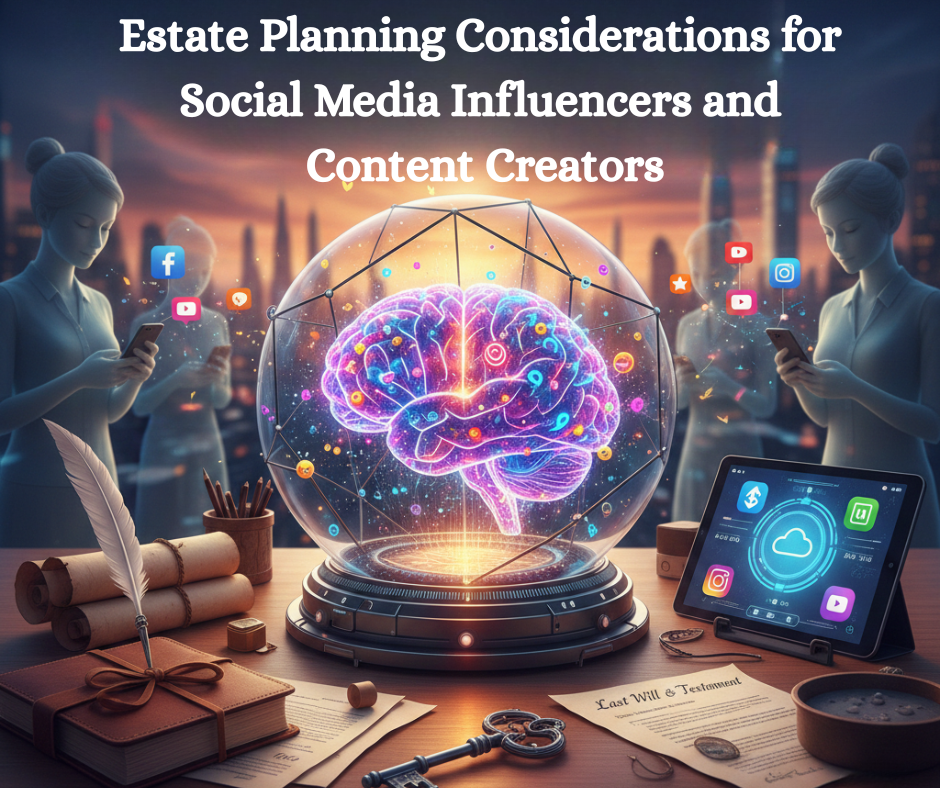
For social media influencers and content creators, an estate plan needs to account for more than a home, investment accounts, and personal property. Today, a creator’s most valuable assets may exist almost entirely online.
A successful YouTube channel, Instagram account, TikTok profile, podcast, website, or digital product business can represent years of work, a loyal audience, intellectual property, and substantial income. Brand partnerships, advertising revenue, affiliate commissions, subscriptions, courses, and licensing arrangements can all become part of a creator’s financial picture.
The important question is not simply, “What happens to my assets when I die?” It is also, “Who will have the authority to manage my digital business if I can no longer do it myself?”
One practical lesson remains consistent: assets are much easier to protect when they are identified, organized, and addressed before a crisis occurs. For content creators, that preparation should include both traditional estate planning and the digital business they have built.
1. Treat Social Media Accounts as Business Assets
An influencer’s social media accounts may be much more than personal profiles. They can represent a valuable combination of audience relationships, advertising revenue, sponsorship opportunities, brand recognition, and business goodwill.
A YouTube channel with years of content, for example, may continue generating advertising revenue even when the creator is no longer actively producing videos. An Instagram or TikTok account may also have substantial value because of its audience and established brand relationships.
But ownership and access are not always as straightforward as they appear.
Social media platforms operate under their own terms of service, privacy rules, and account policies. A family member knowing the password does not necessarily mean that person has legal authority to access or operate the account.
A well-prepared estate plan should therefore identify important digital accounts and establish who is authorized to manage them. Your instructions can also address whether you want particular accounts continued, transferred when legally possible, memorialized, archived, or closed.
Practical consideration: Keep an up-to-date inventory of your important accounts, but store passwords and authentication information securely rather than placing sensitive credentials directly in your will.
2. Protect Your Intellectual Property
For many creators, intellectual property is the heart of the business.
Your estate may include copyrights in videos, photographs, written content, music, graphics, online courses, e-books, and other original works. It may also include trademarks, logos, brand names, domain names, and licensing rights.
These assets can have value long after a creator stops working.
Consider creating a detailed inventory of:
- Copyrighted videos, photographs, articles, and other content
- Trademarks and brand names
- Domain names and websites
- Online courses and digital products
- Subscription or membership content
- Licensing agreements and royalty rights
- Original creative files and business materials
The legal structure holding these assets also matters. Depending on the circumstances, intellectual property and other business assets may be owned personally, through an LLC or corporation, or through another planning structure.
The right structure depends on the creator’s circumstances and should be coordinated with the creator’s broader estate plan.
3. Plan for Ongoing Income and Business Contracts
A creator’s income may come from dozens of sources rather than a single employer.
There may be advertising revenue, affiliate programs, sponsorship agreements, memberships, subscriptions, merchandise, licensing arrangements, speaking engagements, courses, and other digital revenue streams.
Those arrangements should not be treated as though they automatically continue after death or incapacity.
Some contracts may restrict assignment. Others may terminate when the individual dies or can no longer perform. Still others may require a company or successor to satisfy specific contractual requirements.
Your estate planning process should include an inventory of your revenue sources and important agreements. Someone should also know where those contracts are located and which relationships may require immediate attention.
If the creator operates through an LLC or corporation, succession planning becomes particularly important. The estate plan and business documents should work together rather than leaving family members to determine how the business should be handled after a crisis.
4. Plan for Incapacity, Not Just Death
This is one of the most commonly overlooked aspects of estate planning.
Imagine a creator who becomes seriously ill or is involved in an accident. The business may still have sponsorship obligations, employees or contractors to pay, advertising revenue to collect, and deadlines to meet.
Who can legally step in?
Who can communicate with sponsors and manage business finances? Which person is authorized to preserve the creator’s intellectual property and handle digital accounts? When important business decisions need to be made, who has the legal authority to act on the creator’s behalf?
A properly drafted power of attorney can be an important part of this planning. Depending on the circumstances and applicable law, additional digital asset authorizations and business succession documents may also be appropriate.
Without proper authority in place, even a financially successful digital business can become difficult to manage at precisely the time when the family needs stability.
5. Consider Tax and Business Planning
Content creators can accumulate a surprisingly diverse collection of assets.
Their estate may include business interests, investment accounts, real estate, equipment, intellectual property, royalty rights, digital products, and receivables. The tax treatment of these assets can vary significantly depending on how they are owned and transferred.
Estate planning should therefore go beyond simply naming beneficiaries.
Depending on the size and nature of the estate, planning may involve business succession, lifetime gifting, trust planning, valuation considerations, income tax issues, and potential estate tax exposure.
Tax rules also change over time, which makes periodic review important. A strategy that made sense when a creator was starting out may need to be reconsidered after the business grows substantially.
6. Protect Your Name, Image, and Likeness
A creator’s identity can itself be a valuable business asset.
Your name, photograph, voice, likeness, personal story, and brand identity may continue to have commercial value after your death. You may want your family or business partners to continue licensing your name and likeness, or you may want to place clear limits on how they can be used.
This is particularly important for creators whose personal identity is inseparable from their business.
Consider leaving written guidance about:
- How you want your brand represented
- Whether your name and likeness may be licensed
- Who should oversee brand partnerships
- Whether existing content should remain available
- Whether new content should be created using archived material
- Which accounts or platforms should eventually be closed
These instructions can provide valuable guidance to the people responsible for carrying out your wishes.
7. Create a Digital Asset Inventory
One of the simplest and most useful steps a creator can take is to create a comprehensive digital asset inventory.
Think beyond social media.
Your inventory might include:
- Social media accounts
- Websites and domains
- Email accounts
- Cloud storage
- Digital wallets and payment accounts
- Advertising platforms
- Affiliate accounts
- Subscription platforms
- Online stores
- Content libraries
- Intellectual property records
- Contracts and sponsorship agreements
- Business banking and accounting information
The inventory should identify what exists, where important records are located, and who should be contacted if something happens to you.
It should be reviewed periodically as the business changes.
8. Coordinate Your Estate Plan With Your Business Plan
One of the biggest mistakes I see in estate planning is treating each document as though it exists in isolation.
Your will, trust, power of attorney, LLC or corporate documents, beneficiary designations, contracts, and digital asset instructions should work together.
For example, naming someone in a will does not necessarily give that person immediate authority to operate a business during your incapacity. Likewise, transferring an asset into a trust without properly coordinating ownership and business records can create unnecessary complications.
For creators with significant businesses, estate planning should be viewed as part of an overall business continuity plan.
Conclusion
Social media influencers and content creators have changed what we traditionally think of as an estate.
Your estate may no longer consist primarily of physical property. It may include an audience, a recognizable brand, intellectual property, digital products, contractual relationships, recurring revenue, and years of creative work.
Those assets deserve thoughtful planning.
A comprehensive estate plan can help provide a clear path for managing your digital business during incapacity and handling your assets after death. More importantly, it can reduce the uncertainty your family may otherwise face when trying to untangle a business that exists largely online.
Your digital legacy did not happen by accident. Your estate plan should not either.
If you have built a business around your name, content, audience, or online intellectual property, consider working with an experienced estate planning attorney to make sure your estate plan and business structure reflect the assets you have actually built.
Remember, this information serves as educational and informational content only and is not a substitute for legal advice. Before making any changes to your estate plan, consult with a lawyer you trust to ensure your decisions align with your individual needs and circumstances. Click the link below to set up a meeting with O’Brien Estate Law, LLC, where we can discuss your specific situation and guide you towards a comprehensive estate plan.