
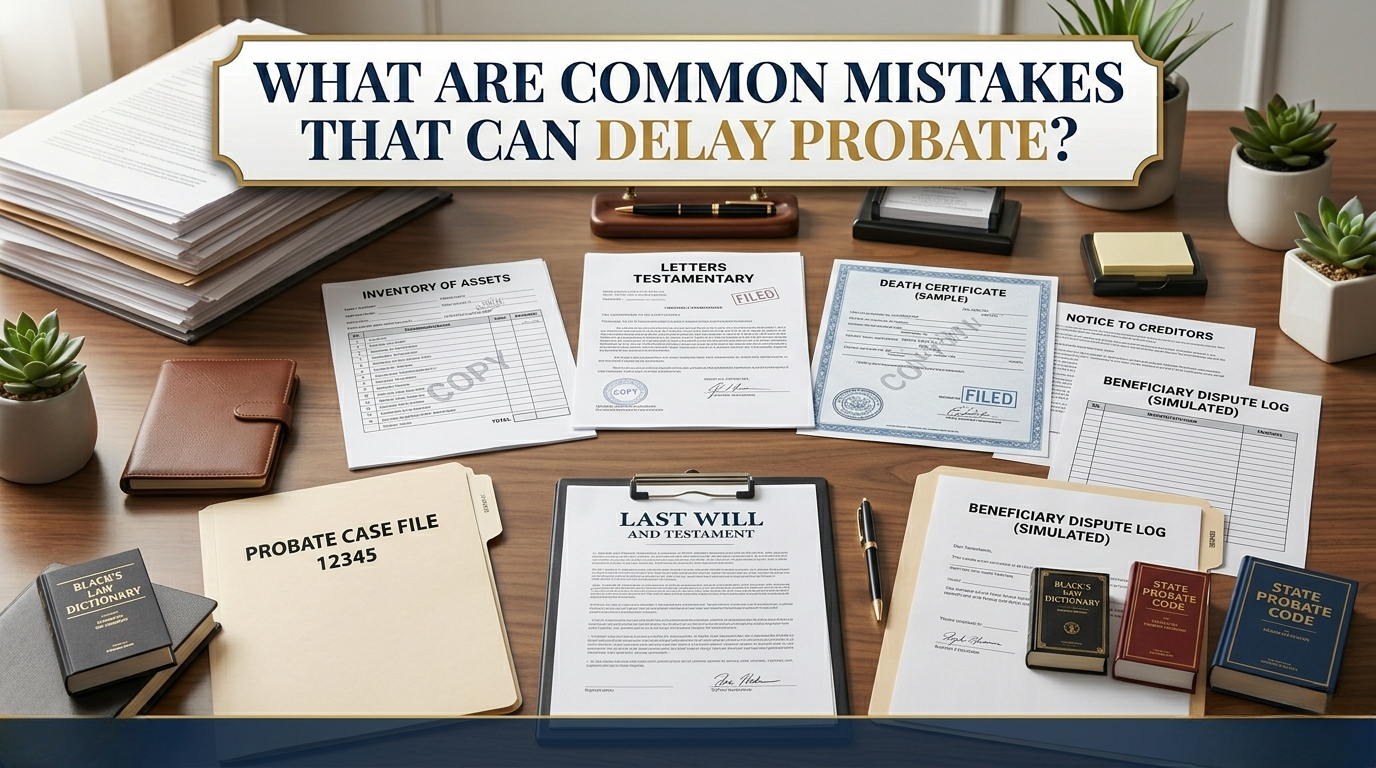
Probate can take months or longer, depending on the complexity of an estate, the requirements of the court, and whether disputes arise.
Although some delays are unavoidable, many are caused by mistakes that could have been prevented through careful estate planning and proper estate administration.
Common mistakes that can delay probate include incomplete or outdated estate planning documents, missing asset information, failure to appoint a suitable executor, disputes among beneficiaries, unresolved debts and taxes, and procedural errors.
These problems can make it harder to identify the rightful beneficiaries, locate and value estate assets, satisfy legal requirements, and distribute property.
Understanding these common probate mistakes can help families prepare ahead of time and help executors administer an estate more efficiently after a loved one passes away.
1. Incomplete or Unclear Estate Planning Documents
One of the most common mistakes that can delay probate is having a will or estate plan that is incomplete, unclear, or improperly prepared.
A will should clearly identify the people who are intended to inherit, explain how the estate should be distributed, and address important circumstances that may arise. When the document contains vague language, conflicting instructions, or missing information, questions can arise about the deceased person’s intentions.
For example, a will might leave property to “my children” without clearly addressing whether the provision includes stepchildren, adopted children, or children born after the will was signed. Depending on the circumstances and applicable law, this may lead to disputes or additional legal proceedings.
How to help prevent this mistake:
- Have estate planning documents prepared or reviewed by a qualified attorney.
- Clearly identify beneficiaries and explain how assets should be distributed.
- Review documents for conflicting or ambiguous provisions.
- Make sure the will is properly signed and witnessed according to applicable state law.
A clear and properly executed estate plan can help reduce uncertainty and provide the executor with a more reliable framework for administering the estate.
2. Outdated Estate Planning Documents or Missing Asset Information
Estate plans should be reviewed periodically, especially after major life changes.
Marriage, divorce, the birth or adoption of a child, the death of a beneficiary, acquiring real estate, or starting a business can all affect how an estate should be handled.
When estate planning documents are not updated, they may no longer reflect the person’s current wishes. Outdated beneficiary designations on retirement accounts, life insurance policies, and other financial accounts can also create complications.
Missing or incomplete asset information can cause additional problems. If the executor does not know where accounts, property, business interests, or important records are located, identifying and gathering the estate’s assets may take longer.
How to help prevent this mistake:
- Review your estate plan after major life events.
- Keep an updated inventory of assets and important financial accounts.
- Maintain a secure record of where relevant documents can be found.
- Review beneficiary designations separately from your will.
An updated estate plan and organized asset records can help the executor identify estate property and determine which assets may need to go through probate.
3. Failing to Name a Suitable Executor
An executor, also called a personal representative in some states, is responsible for administering the estate in accordance with the will and applicable law.
This role can involve filing documents with the probate court, locating and managing assets, notifying creditors and beneficiaries, paying valid debts and expenses, filing required tax returns, and distributing property.
Naming someone who is unable or unwilling to serve can create unnecessary delays. If the named executor declines the appointment, has died, or cannot legally serve, the court may need to appoint another person.
Even when an executor is willing to serve, choosing someone who is disorganized, unavailable, or unfamiliar with the responsibilities can make administration more difficult.
How to help prevent this mistake:
- Choose someone who is responsible, organized, and willing to serve.
- Discuss the role with the person before naming them.
- Consider naming an alternate executor.
- Make sure the person knows where to find your estate planning documents.
The right executor can help keep the administration organized, meet important deadlines, and communicate effectively with beneficiaries and professionals.
4. Family Disputes and Conflicts Among Beneficiaries
Family disagreements can be among the most difficult causes of probate delays.
Disputes may arise when beneficiaries question the validity of a will, disagree about how property should be distributed, challenge the executor’s actions, or believe that the deceased person’s wishes were not properly reflected in the estate plan.
For example, one beneficiary may believe a parent promised them a particular property, while the will leaves that property to someone else. Another beneficiary may question whether the deceased person had the capacity to sign the will or whether someone improperly influenced them.
When disagreements escalate, the parties may need court intervention. Will contests and other probate litigation can significantly extend the process and increase estate expenses.
How to help prevent this mistake:
- Clearly communicate estate planning intentions when appropriate.
- Use properly prepared legal documents rather than relying on informal promises.
- Review provisions that may create confusion or conflict.
- Consider whether a trust or other estate planning arrangement may be appropriate for the family’s circumstances.
Although no estate plan can guarantee that disputes will never occur, clear documents and thoughtful planning can help reduce the risk of misunderstandings.
5. Unresolved Debts, Taxes, or Insufficient Estate Funds
Before an estate can be fully distributed, the executor generally must address valid debts, expenses, and applicable tax obligations according to state law and the estate’s circumstances.
This process can become complicated when the deceased person had significant outstanding debts, incomplete financial records, tax issues, or insufficient liquid assets to cover obligations.
For example, an estate may contain a valuable house but very little cash. If the estate needs funds to pay valid claims, expenses, or taxes, the executor may need to consider selling property or taking other steps permitted by law.
These matters can delay distribution while the executor determines what is owed and how the obligations should be handled.
How to help prevent this mistake:
- Keep financial records and account information organized.
- Make sure the executor can locate important documents.
- Consider whether the estate may need sufficient liquid assets to cover expenses.
- Consult qualified legal or tax professionals when complex obligations are involved.
The executor should not rush to distribute assets before determining whether the estate has met its legal and financial obligations.
6. Failing to Follow Probate Procedures and Deadlines
Probate is a court-supervised legal process, and its requirements vary by state.
Executors may need to submit specific documents, provide notices to interested parties, prepare inventories or accountings, and comply with court deadlines. Missing a filing deadline, submitting incomplete paperwork, or failing to provide required notice can result in additional court requests or corrective filings.
For example, if a probate petition is missing required information, the court may require the executor to correct and resubmit it. That can delay the appointment of the personal representative and prevent other administration steps from moving forward.
How to help prevent this mistake:
- Understand the probate requirements in the state where the estate is being administered.
- Keep track of filing deadlines and required notices.
- Maintain accurate records of estate transactions.
- Seek legal guidance when the estate involves complicated assets, disputes, or procedural questions.
Careful attention to probate procedures can help reduce avoidable administrative delays.
7. Trying to Handle a Complex Estate Without Professional Guidance
Probate can involve more than distributing property to beneficiaries. Depending on the estate, the process may include real estate transfers, business interests, creditor claims, tax matters, contested documents, or assets located in multiple states.
Without appropriate guidance, an executor may overlook important legal requirements, make mistakes when handling estate property, or distribute assets before it is appropriate to do so.
An experienced probate attorney can help the executor understand applicable requirements, prepare and file necessary documents, address disputes, and navigate issues that arise during administration.
Professional guidance can be particularly helpful when:
- The estate includes real estate or business interests.
- Beneficiaries disagree about the estate.
- The deceased person had substantial debts or tax concerns.
- The will’s validity is being challenged.
- Assets or beneficiaries are located in different states.
The appropriate level of legal assistance depends on the estate and the laws that apply. Seeking guidance early can help identify potential problems before they become more difficult to resolve.
How Can You Help Prevent Probate Delays?
While no one can guarantee that probate will be completed within a specific timeframe, careful planning can help reduce avoidable complications.
Consider these steps:
- Create a clear estate plan. Make sure your will and other estate planning documents accurately reflect your wishes.
- Keep documents current. Review your estate plan after significant life changes.
- Organize financial records. Maintain a list of assets, accounts, and important documents.
- Choose an appropriate executor. Select someone capable of managing the responsibilities and name an alternate if appropriate.
- Review beneficiary designations. Confirm that retirement accounts, life insurance, and other applicable assets have current designations.
- Communicate important information. Make sure the people responsible for your estate know where to find relevant documents.
- Seek professional guidance. Work with qualified legal and tax professionals when your circumstances call for it.
These steps can help make the estate administration process more organized and reduce the likelihood of preventable delays.
Can Estate Planning Help Avoid Probate Delays?
In some circumstances, estate planning can help reduce the number of assets that must pass through probate.
Depending on state law and how assets are owned or designated, certain assets may pass directly to beneficiaries or surviving owners outside the probate process. A properly established and funded revocable living trust may also help transfer assets without probate.
However, having a trust alone does not automatically avoid probate. Assets generally need to be properly transferred to the trust or otherwise arranged to pass outside probate. Property left outside the trust may still require probate.
The right approach depends on the person’s assets, family circumstances, goals, and applicable state law.
Frequently Asked Questions About Probate Delays
What is the most common reason probate gets delayed?
There is no single reason that applies to every estate. Common causes include incomplete paperwork, disputes among beneficiaries, difficulty locating or valuing assets, creditor and tax issues, and court processing requirements.
Can an outdated will delay probate?
Yes. An outdated will may create confusion about who should inherit or how property should be distributed. Depending on the circumstances, this may lead to disputes or additional legal proceedings.
Can family disputes stop probate?
Family disputes can delay probate, especially when someone challenges the will, disputes the executor’s actions, or contests how assets should be distributed. The effect depends on the nature of the dispute and the court’s procedures.
Does naming an executor help probate move faster?
Naming a suitable executor can help avoid delays associated with finding and appointing someone to administer the estate. However, the executor must still comply with applicable legal requirements and court procedures.
Can probate be avoided completely?
Some assets may pass outside probate through beneficiary designations, survivorship arrangements, or properly funded trusts, depending on applicable law. However, probate may still be necessary for assets that remain in the deceased person’s sole name without an effective transfer arrangement.
Conclusion
Probate delays can create uncertainty, stress, and additional expenses for families who are already dealing with the loss of a loved one. While some delays are unavoidable, many common problems can be addressed through thoughtful estate planning and organized estate administration.
Clear and updated documents, a suitable executor, accurate asset information, and proactive planning can help reduce confusion and prevent avoidable complications. When probate is necessary, following the required procedures and seeking professional guidance when appropriate can help the estate move forward.
Remember, this information serves as educational and informational content only and is not a substitute for legal advice. Before making any changes to your estate plan, consult with a lawyer you trust to ensure your decisions align with your individual needs and circumstances. Click the link below to set up a meeting with O’Brien Estate Law, LLC, where we can discuss your specific situation and guide you towards a comprehensive estate plan.